
Back pain is a multi-faceted condition that affects millions of Americans daily. Low back pain, in fact, accounts for the second most common reason for visits to primary care physicians annually and takes up $ 50 billion dollars worth of annual medical costs.
One of the easiest ways to think about the back, in general, is as a “suspension bridge.” The ligaments, tendons, and muscles of the back comprise the cables of the bridge. The ligaments and tendons act as the primary support cables of the bridge whereas the muscles act as secondary (or auxiliary) support structures for times of high tension or stress. The vertebral bones, discs, and cartilage in-between act as the hardware of the bridge. The spinal cord and associated nerves act as electrical sensors of the bridge that help it to react (in biofeedback manner) to the stresses placed on the bridge. In the clinical setting, most allopathic practitioners (including orthopedic surgeons, interventionalists, and pain management physicians, radiologists) focus largely on the hardware of the “bridge,” choosing to look for pathology in the vertebrae, discs, and cartilaginous structures. (Of note: most MRI exam reports primarily discuss the health of this hardware almost exclusively). However, the ligaments, muscles, and tendons (the suspension cables of the bridge) play a large role in the health, alignment, and function of the bridge, although many physicians rarely discuss these structures.
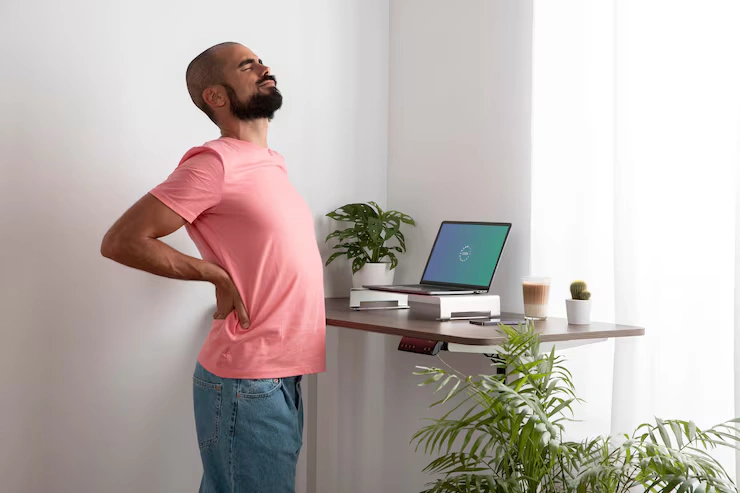
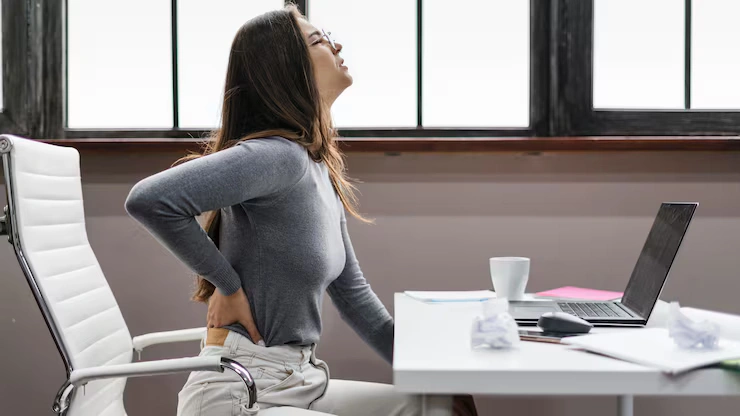
Traditional osteopathic practitioners are uniquely skilled in assessing and treating the pathology of both the hardware as well as the suspension cables of the bridge (back). Using a mix of palpatory skills, imaging tools, clinical experience, and scientific evidence, osteopathic physicians can help patients understand and treat the back with manual therapy, injections, pain medications, nutritional support, home stretching, and sometimes referral to surgery. Numerous medical conditions can cause back pain (also known as lumbago when in the low back). Most common causes include back strain (including lumbar strain or lumbro-sacral strain, ligament laxity and fibrosis), muscle spasm, vertebral disc pathology (including disc herniation, protrusion, rupture, extrusion, or degeneration), somatic dysfunction (including subluxation, misalignment, disarticulation), facet arthropathy (including facet arthritis, inflammation), tendinitis, sacroiliitis, and spinal cord injury.
Back Strain (Ligament laxity)
Back strain refers simply to the stretching or micro-tearing of ligaments in the back which may cause short term or chronic pain, inflammation, instability, or even muscle spasms. Injured ligaments in the back can be complex to diagnose by the average family practitioner, physical therapist, chiropractor, or even orthopedic physician due to the fact that ligaments are rarely observed on MRI exams and the lack of palpatory training (that an osteopathic physician receives). Instead of assessing precisely where a ligament is injured, many of these practitioners treat symptoms of the condition, prescribing anti-inflammatory medications, stretching and physical therapy, massage, chiropractic adjustments, steroid injections, and sometimes even surgery. While many of these modalities have merit when used properly, they often fail as the best treatment for chronic back strains due to ligament laxity or fibrosis (scar tissue within the ligament).
Prolotherapy, made of a solution containing concentrated dextrose (sugar water) mixed with local anesthetic, injected at the ligament site where most injured (usually at or near the ligament’s attachment to a bone) can be a very effective solution to a back strain. Prolotherapy works by causing a temporary, low grade inflammation at the injection site, activating fibroblasts to the area, which, in turn, synthesize precursors to mature collagen and thus reinforce connective tissue. It has been well documented that direct exposure of fibroblasts to growth factors (either endogenous or exogenous) causes new cell growth and collagen deposition. Inflammation creates secondary growth factor elevation. The inflammatory stimulus of prolotherapy raises the level of growth factors to resume or initiate a new connective tissue repair sequence which had prematurely aborted or never started. Animal biopsy studies show ligament thickening, enlargement of the tendinosseous junction, and strengthening of the tendon or ligament after prolotherapy injections (Alderman, 2015).
These prolotherapy injections, depending on the number of ligaments injured in a back strain can be extensive procedures with patients often requiring 8-12 back injections in one treatment session. Due to the nature of the inflammation that prolotherapy injection create, patients may feel that their pain is increased after the injections for 2-3 days. After that time, most patients experience a decrease in pain but often require a repeat of injections 7-14 days later for more consistent pain relief. Some patients, with severe injuries, will require 3-5 sessions of injections.
Unlike cortisone injections, prolotherapy injections in the back are designed to promote long-term healing for back strains. In a study of 81 patients that received spinal manipulation and injections for chronic lumbar strain, 40 participants received a proliferant solution (composed of dextrose-glycerin-phenol) with local anesthesia and 41 participants received a parallel treatment of saline (in place of the proliferant) mixed with local anesthesia. None of the patients were informed of which solutions were injected. At at time period 6 months after these injections, 35 of 40 patients in the experimental group had more than 50% improvement in pain. Only 16 of the 41 patients in the control group had improvements in pain or freedom from disability (Ongley et al, 1987). As in many studies, prolotherapy in effective for reducing long-term chronic pain in approximately 85% of studied lumbar strain patients.*
*Results may vary; no guarantee of specific results
Muscle Spasm of Back
Back spasms can often be associated with back strains or tendonitis of the back but they do not have to be. Back muscle spasms happen with sports injuries, sleeping awkwardly, poor posture, after surgery, or simply sitting, leaning over, or standing for too long in one position. If these spasms (tightening of the muscle fibers) are addressed early in the injury with proper manual therapy, stretching, strengthening, or massage, they will usually resolve without further complications. However, if the muscle spasm in the back is ignored or does not resolve with conservative manual therapy, then a more extensive, chronic spasm can result.
If we think of the back as a suspension bridge, muscles are designed to tighten as backup support or for stressful loads. They are not designed in the back to be in a constant state of contraction over long periods of time. When this occurs, ligaments or tendons of the back are likely involved and should be addressed as well as the muscle spasm.
Traditional osteopathic physicians see muscle spasms in the back wholistically and use the osteopathic manual therapy (including counterstrain, stretching, muscle energy, myofascial release) to address muscle spasms along with injection treatments. Trigger point injections are injections designed to release muscle spasm (usually near the center of the muscle belly) where the muscle has, in effect, twisted upon itself. These injections, usually include local anesthesic and trace amounts of magnesium chloride, serve to calm the inflammation in the muscle so that it releases the chronic tension. This trigger point areas of the muscle may also benefit from using injected ozone alongside the local anesthestic. Studies of ozone injections of the paraspinal muscles of the low back demonstrate successful alleviation of back pain, including pain that is related to a herniated disc. Monolateral or even bilateral injection of 5-10 mL of gas with an ozone concentration of up to 20 μg/mL is performed into the trigger points of the paravertebral muscles corresponding to the metamers of the herniated disc usually interesting from L4 to S1. This “chemical acupuncture” is the indirect approach for treating lumbar disc herniation and alternate daily treatments for about 3 weeks yield a therapeutic results in about 68% of the patients (Elvis and Etka). Vert Mooney, M.D., a prominent orthopedic surgeon and former chairman of orthopedics at the University of California, San Diego, wrote a recent editorial in The Spine Journal concerning prolotherapy. He concluded that “this fringe treatment (prolotherapy) is no longer at the periphery and seems to be at the frontier of a justifiable, rational treatment with a significant potential to avoid destructive procedures. (Klien et al).
Low back pain (Lumbar strain, Disc herniation, Disc bulge, Disc degeneration, Facet arthritis, Ligament sprain, Ligament laxity)
Low back pain is often due to lumbar strain, disc herniation, disc bulge, disc degeneration, facet arthritis, ligament sprain, ligament laxity. In the orthopedic clinic, most patients, unless acutely injured, with significant low back pain have to go to physical therapy initially. Many of these patients fail to get long-term relief and thus are referred to get an MRI. MRI imaging may or may not show a disc herniation, degeneration, facet arthropathy, or foraminal stenosis, or some other vertebral column pathology. If the MRI shows a disc pathology, orthopedic surgeons or interventionalists (such as PM&R doctors) are called in for surgery (if the disc injury is causing significant arm or leg muscle weakness) or the patient gets a cortisone shot for the pain. Orthopedic surgery and cortisone shots may be necessary at times, but these procedures are routinely overdone in the U.S. Many patients can resolve their disc herniations on their own over time as proven by the fact that ⅓ of all patients live with lumbar disc herniations without even knowing it.

That being said, many back pain patients suffer from back pain etiologies that never show up on an MRI report. These back pain patients often cope for years without relief because few practitioners in the orthopedic world understand how to manually diagnose ligament sprains or tendonitis in the back. Osteopathic physicians such as Dr. Hughes, in comparison, have unique palpatory skills for addressing and treating patients with back pain from lumbar strain, disc herniation, disc bulge, disc degeneration, facet arthritis, ligament sprain, or ligament laxity. Osteopathic physicians help back pain patients, even if they suffer from disc herniations, find relief from their pain with PRP (as bioactive plasma) injections of ligaments, tendons, and facets attached to the vertebral bodies and transverse processes. Along with intradiscal ozone, PRP (as bioactive plasma) can also be used to minimize disc herniations and relieve pressure on radicular nerves that cause sciatic pain and inflammation in the leg. PRP (as bioactive plasma) injections also help facets to be less arthritically inflamed. To understand better, think of the back as a suspension bridge with the ligaments and tendons as the cables of the bridge and the vertebral bodies as the solid component structure of the bridge. If the cables get loose or frayed–the ligament or tendon laxity or injury– from a big lift or impact (eg. moving all day or a football hit), the bridge will swing more and collapse more on itself resulting in disc herniations, disc degeneration, or facet arthropathy. Whatever you do to address back pain, make sure to use a comprehensive approach that addresses all the anatomy (including ligaments, tendons, discs, vertebrae, facets, etc) of your one and only suspension bridge of a back.
Pelvis/Sacral pain (Lumbro-sacral strain, Sacroiliitis, Gluteal strain, Gluteal tendonitis, Sciatica, Piriformis syndrome)
Pelvis/Sacral pain can derive from a lumbro-sacral strain, sacroiliitis, gluteal strain, gluteal tendonitis, sciatica, or piriformis syndrome. Along with osteopathic manual therapy, all of these conditions causing low back pain, pelvic pain, or sacral pain can be addressed using PRP (as bioactive plasma). Note that very few of these conditions will show up on an XR or MRI imaging report. To get the best diagnosis and treatment of your condition, it is key to have a skilled osteopathic practitioner assess the injury manually.
References
Alderman, D. (2010). The new age of prolotherapy. Practical Pain Management, 10(4).
Akeda, K., Imanishi, T., Ohishi, K., Masuda, K., Uchida, A., Sakakibara; T., Kasai, Y., Sudo, A. (2012). Intradiscal Injection of Autologous Platelet-Rich-Plasma for the Treatment of Lumbar Disc Degeneration. Department of Orthopaedic Surgery and Spinal Surgery and Medical Engineering, Mie University Graduate School of Medicine, Mie, Japan, Transfusion Service, Mie University Hospital, Mie, Japan, Department of Orthopaedic Surgery, University of California, San Diego.
Andersson, G., Lucente, T., Davis, A., Kappler, R., Lipton, J., & Leurgans, S. (1999). A Comparison of Osteopathic Spinal Manipulation with Standard Care for Patients with Low Back Pain. The New England Journal of Medicine, 341, 1426-1431.
Andreula, C. F., Simonetti, L., de Santis, F., Agati, R., Ricci, R., & Leonardi, M. (2003). Minimally Invasive Oxygen-Ozone Therapy for Lumbar Disk Herniation. AJNR American Journal Neuroradiology, 24, 996-1000.
Bocci, V., Zanardi, I., & Travagli, V. (2011). Oxygen/ozone as a medical gas mixture. A critical evaluation of the various methods clarifies positive and negative aspects. Medical gas research, 1(1), 1-9.
Boyles, S. (2009). Ozone may help herniated disc pain. WebMD. Retrieved from http://www.webmd.com/back-pain/news/20090309/ozone-may-help-herniated-disc-pain.
D’Erme M, Scarchilli A, Artale A, Pasquali Lasagni, M. (1998). Ozone therapy in lumbar sciatic pain. Raidol Med. 95, 1-2.
Licciardone, J. C. (2008). The epidemiology and medical management of low back pain during ambulatory medical care visits in the United States.Osteopathic Medicine and Primary Care, 2(1), 1-17.
Ongley, M., Dorman, T., Klein, R., Eek, B., & Hubert, L. (1987). A new approach to the treatment of chronic low back pain. The Lancet, 330(8551), 143-146.
Phend, C. (2009). Ozone shots as fffective as surgery for back pain. Medpage Today. Retrieved from http://www.medpagetoday.com/MeetingCoverage/SIR/13206.
Work, H. I., & FAQs, P. Prolotherapy for Back Pain Treatment.
Contact Aspen
Integrative Medicine

BASALT:
227 Midland Ave, Suite 18B, Basalt, CO 81621
(In the courtyard between Basalt Firearms and Karen White)
Hours: Tuesday & Thursday: 12pm-5pm
Appointment required
ASPEN:
230 S. Mill Street, Aspen, CO 81611
(Above Royal Street Fine Art and Across from Louis Vuitton)
Hours: Monday, Wednesday, Friday: 12pm-5pm
Appointment required