
Rebuild. Rejuvenate. Regrow.
Prolotherapy and Prolozone for Colorado Patients
Initiate the Healing Cascade
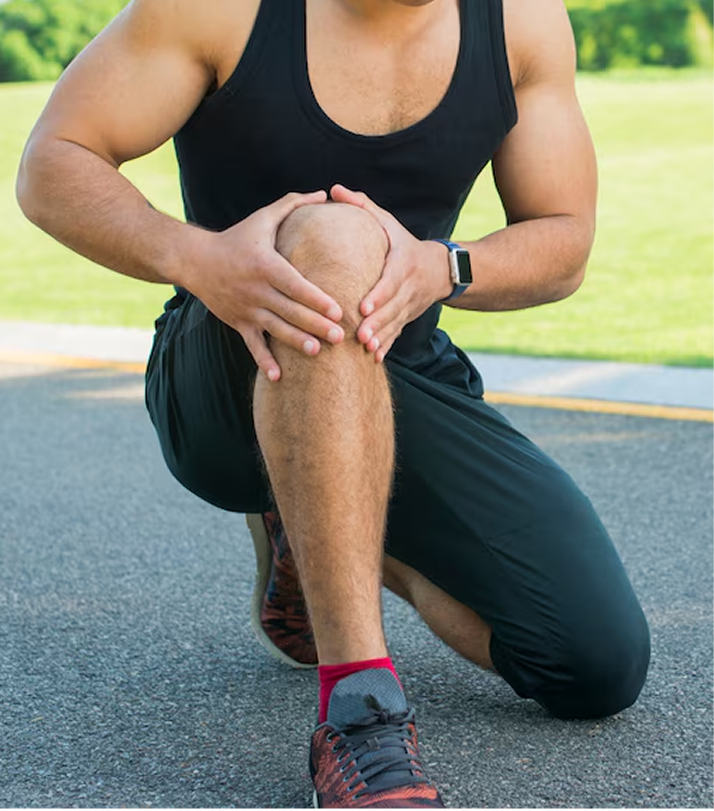
Prolotherapy and Prolozone Are Used to Treat:
- Knee, Foot or Ankle Pain
- Shoulder (Rotator Cuff) Injury
- Sacroiliac or SI Joint (SIJ) Pain
- Osteoarthritis Pain
- ACL Injuries
- Neck, Upper and Lower Back Pain
- Regional Pain Syndrome (RSD)
- Degenerative Disc Disease (DDD)
- Tennis / Golfer’s Elbow
- Wrist and Hand Pain
- Cervicogenic Headaches
- Myofascial Pain Syndromes
- Tendinosis
- Hip or Groin Sprain
- Sciatica and Temporomandibular Joint (TMJ)
- Spondylosis (Spinal Osteoarthritis)
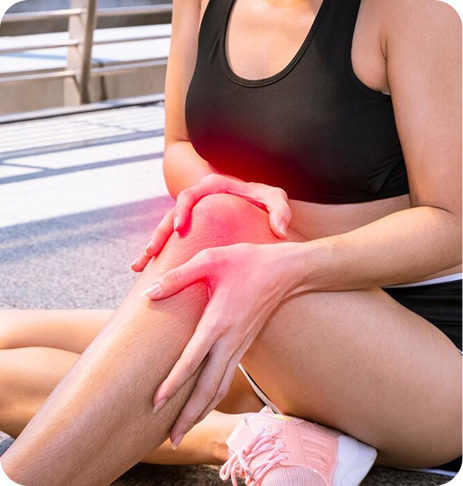
What Is Prolotherapy?
- The “prolo” in prolotherapy is derived from the word “proliferation,” as the therapy is intended to proliferate tissue growth in the damaged area. This is also called regenerative injection therapy (RIT) because the treatment extends beyond the proliferative stage, which is only the second stage of the regenerative healing process.
- Prolotherapy is an injection technique that has been shown to stimulate cell growth, stabilize tissue, and strengthen weakened joints, cartilage, ligaments and tendons. Prolotherapy injections rebuild and strengthen the complete joint structure, even in patients with no cartilage.
- This non-surgical injection therapy may eliminate the need for joint replacement, which usually requires a recovery time of three or more months and costs thousands.* Prolotherapy can be effective because it addresses and eliminates the cause of chronic pain arising from connective tissue such as ligaments, tendons and cartilage.
- *Results may vary; no guarantee of specific results
How Does Prolotherapy Work?
Prolotherapy works by causing a temporary, low grade inflammation at the injection site, activating fibroblasts to the area, which, in turn, synthesize precursors to mature collagen and thus reinforce connective tissue. It has been well documented that direct exposure of fibroblasts to growth factors (either endogenous or exogenous) causes new cell growth and collagen deposition. Inflammation creates secondary growth factor elevation. The inflammatory stimulus of prolotherapy raises the level of growth factors to resume or initiate a new connective tissue repair sequence which had prematurely aborted or never started. Animal biopsy studies show ligament thickening, enlargement of the tendinosseous junction, and strengthening of the tendon or ligament after prolotherapy injections (Alderman, 2015).
What Is Prolozone? How Is It Different from Prolotherapy?
While prolozone therapy is similar to prolotherapy in that it also involves regenerative injections, prolozone injections contain less dextrose and therefore typically produce less inflammation. Prolozone also includes the injection of ozone into the tissue, which increases the blood supply and flow of healing nutrients while stimulating the deposition and activity of fibroblasts and chondroblasts.
These cells synthesize the collagen and cartilage that the body uses to repair damaged ligaments and joints. The prolozone injections increase cellular repair activity to strengthen and tighten the injured tissues; thereby stabilizing the area, and removing the cause of the pain.
Ozone is a naturally occurring, highly reactive molecule consisting of three atoms of oxygen. Because ozone is so reactive, it is able to heavily stimulate fibroblastic and chondroblastic activity. This high level of reactivity, combined with the innate safety of oxygen, makes ozone a highly therapeutic molecule.
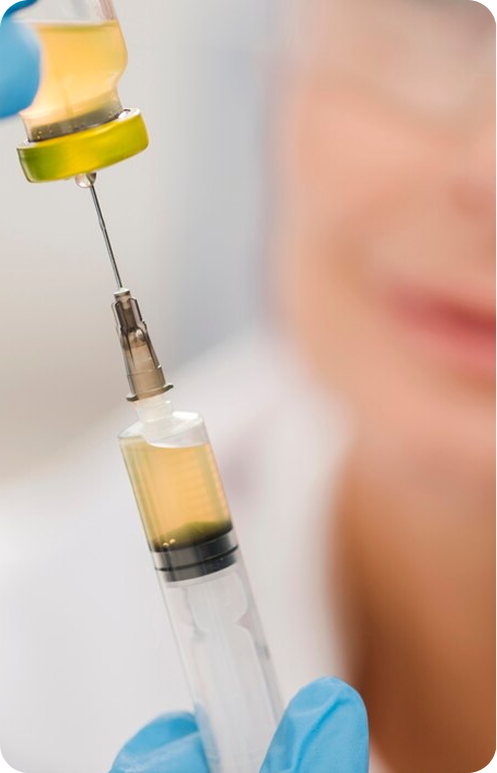
What Is the Technique for Prolotherapy Injections?
1. The prolotherapy injection is placed into the damaged ligament or tendon at the point where it attaches to the bone.
2. The injection produces an inflammation, which increases blood flow, swelling and pain.
3. The body then launches a course of repair and healing. The inflammation tricks the body into thinking another injury has occurred, so it sends in macrophages, which are cells that ingest and destroy the irritant solution. These cells clean up the area.
4. The body then sends in fibroblasts, which are cells that help build fibrous tissue.
5. The fibroblasts excrete collagen, a protein that makes the ligaments denser and stronger. The stronger ligaments provide more support for the joints and alleviate the pain.*
*Results may vary; no guarantee of specific results
FAQs
Frequently Asked Questions
You should relax. The shots can be a little painful, but Dr. Hughes or an associate will give you a sedative (if necessary) and pain-killers before and after the prolotherapy injections. Do NOT take naproxen (Aleve), aspirin or ibuprofen for at least two days before the shot. You may take Tylenol, Tramadol, Vicodin, Norco, Percocet or anything natural before the shot (However, cut back on fish oil for two days prior). If you need a pain medication stronger than Tylenol, Dr. Hughes can provide it for you.
You may also want to set up an acupuncture, physical therapy, massage or Rolfing session on the day of – or day after – the injection. Dr. Hughes often brings a therapist to assist during the prolotherapy injections, especially when large tendons, joints, necks or backs are injected.
If you do not want to have a therapist present during the injections, please tell Dr. Hughes in advance. Most insurance companies will pay for the therapist to assist with massage or acupuncture during the shots. Patients without insurance usually pay an average of $60.00 to have the therapist present during the injection.
Depending on your age and level of activity, you may require more than just standard prolotherapy if your injury has existed for a long time. Dr. Hughes must often break up some of the scar tissue, bone spurs, or fibrotic tendons or ligaments before prolotherapy can work best, and this can cause some brief pain.
Most tendons and ligaments do not fully heal to 100 percent tensile strength unless that fibrotic tissue has been removed. As the needle breaks up this scar tissue, patients will often feel a shooting, nerve-like pain for a second or two due to the nerve fibers embedded in the scarred ligaments and tendons.
Even when a full or partial regional nerve block is done (which Dr. Hughes may perform), the pain from prolotherapy can feel similar to the pain elicited by a dental procedure. While Dr. Hughes always uses a generous amount of local anesthetic for every procedure, there may still be pain because the nerve has been trapped in the scar tissue, preventing the local anesthetic from reaching it for a second before it breaks down.
When the scar tissue is removed, the nerve “wakes up,” often with a little shock. This shock is quickly tempered by the local anesthetic as it bathes the nerve so that the pain discontinues rapidly.
The best analogy for this type of nerve tissue that is covered by scar tissue is snow laying over a power line in a way that prevents the flow of electricity. When the “snow” is removed by the needle of Dr. Hughes (see the skier in the photo), the electrical signal begins to work again, often with a tiny little jolt. That little jolt is the life of your nervous system sending power and sensation again to the area of injury along with surround tissues.
Dr. Hughes recommends that any patients with such fibrotic scar tissue take a little sedative and pain medication before he performs any procedure on the ligament, tendon or joint.
Administered by Dr. Hughes at our clinic in Basalt or Aspen, Colorado, the prolotherapy procedure is most often guided by ultrasound imaging, allowing for incredibly precise injections. With the ultrasound visualization, Dr. Hughes addresses what is most critical for the patient on the day of the injection.
Sometimes, the ultrasound allows Dr. Hughes to identify and inject a torn ligament or tendon (for example, a rotator cuff tear). At other times, Dr. Hughes must inject a bone spur or scar tissue. Torn ligament injections may feel different than injections into scar tissue.
Dr. Hughes always gives each patient a healthy dose of local anesthesia during the prolotherapy injection; however, this local anesthesia may not prevent the sharp pain felt for only a few seconds after a lesion or scar tissue is injected.
Also note that prolotherapy injections can sometimes cause bruising for days or even a few weeks afterwards. Warm water and gentle motion followed by ice packs for inflammation can reduce the swelling and bruising that may occur during or directly after the injections.
A standard series of injections for most prolotherapy patients is between 2 to 5 visits. Each injection is separated by a maximum of 2 weeks unless there is significant pain or inflammation after the first procedure.
Patients may feel significantly better after the first visit and fail to come back soon enough for the benefit of a second visit. It is recommended to come back sooner than later for a second, third and fourth set of prolotherapy injections.
Some prolotherapy treatments, including those involving bone spurs and scar tissue removal, may take up to eight visits. Please ask Dr. Hughes about your prognosis and how many visits may be necessary for you.
For most patients, following a healthy diet with plenty of protein, along with adequate rest, is the key to recovery after prolotherapy injections. A lot of patients make the mistake of exercising too aggressively after the injections and then end up slowing down or even impeding the healing process and collagen remodeling described above.
Dr. Hughes recommends that patients spend at least two days resting the injected body part, treating it as if it had been acutely sprained. For the next 2 to 3 weeks, patients should be careful about aggressive or prolonged sports activities (ex. skiing moguls, basketball, hiking downhill and even high-level yoga) and jerky motions.
Most patients benefit from adding heat to the injected area and following it with ice packs and elevation (for limbs) for about 2 to 3 days to reduce the inflammation. Patients may take pain-killing medications or natural substances with the exception of ibuprofen, Aleve, Motrin, aspirin or other NSAIDs (including Celebrex).
Dr. Hughes may prescribe either a muscle relaxer or a light narcotic medication for patients with acute pain. Patients may use anything natural to help their pain (including Traumeel, Arnica, Capzasin cream, etc.) but should avoid or decrease intake of direct prostaglandin inhibitors such as fish oil for approximately 2 weeks after the prolotherapy injections.
In order to stimulate healing more rapidly, Dr. Hughes recommends that all patients consider adding the following supplements to their regimen:
Vitamin C: 3000 mg 2x/day or a natural form (such as Cataplex C 4 pills/2x day)
Collagen (Neocell): 2 scoops 2x/day (okay to mix with Vitamin C and fruit juice, but take at least 30 minutes away from other food)
Many patients also benefit from physical therapy, massage, acupuncture, chiropractic care, yoga and osteopathic manipulative therapy directly after the prolotherapy injections. Please discuss your plans with Dr. Hughes during or before the injections so that his staff and associated clinics can address your concerns.
When you have a condition requiring prolotherapy, your body is already chronically inflamed. It needs to finish the healing process by resting and potentially utilizing controlled proliferative shots to bring the attention of the growth factors, cytokines, oxygen and overall blood flow to the precise points of injury in the ligaments and tendons.
This healing process may shift the chronic inflammation to an acute state as the body heals, prompting some patients to feel more pain for a few days (or longer) after the initial prolotherapy shots.
You will likely want to rest for 2 days after each series of prolotherapy shots, doing only light activities with minimal lifting and avoiding any kind of extreme sports. Then you need to go easy over the course of the next 2 to 4 months as your injury heals. The proper level of activity varies for each person, as it does following other medical procedures.
A common reason your back muscles get chronically tight and fail to function properly (“lock up”) is that ligaments become damaged, acting more like rubber bands or frayed ropes than the cables they should be. Without rest, your ligaments may get worse.
Think of it like this: Your back is like a suspension bridge (ex. the Golden Gate Bridge). The hardware of the bridge are the bones along with some of the cushioning of the discs. The software of the bridge are the muscles, tendons and ligaments.
The muscles are backup support and for extreme activities (ex. skiing, running, etc.), but otherwise, the ligaments with some tendons do most of the work. If they fail, the bridge (your hardware and software) starts to swing and more pressure gets put on the discs and the muscles fire more frequently. Then, your discs may herniate, or first bulge and then herniate.
Physical therapy can be instrumental to your recovery, but over-strengthening and stretching the muscles before the ligaments heal is usually just a Band-Aid, and it can sometimes do more damage than good. Trying to make these overworked muscles fire more than they want to is just asking for more injury.
Prolotherapy works by stimulating your body’s natural ability to heal the ligaments and tendons, ultimately allowing your muscles to relax. Your bridge is no longer swinging in the wind and the muscles will only need to tighten down during rigorous activity like catching big air on your mountain bike or snowboard, or maybe just running up and down your favorite trail.
Prolotherapy injections are not typically covered by insurance, and we expect payment at the time of treatment. However, if an ultrasound is used or any other type of injections are administered, your insurance may reimburse you for those procedures.
The cost of prolotherapy depends on the body area, complexity and number of injections needed. Typical prolotherapy procedures range from $500-$900.
References
Alderman, D. (2015). The New Age of Prolotherapy. Practical Pain Management.
Andreula, C. F., Simonetti, L., de Santis, F., Agati, R., Ricci, R., & Leonardi, M. (2003). Minimally Invasive Oxygen-Ozone Therapy for Lumbar Disk Herniation. AJNR American Journal Neuroradiology, 24, 996-1000.
Applied Ozone Systems. Medical ozone oxygen therapy references. Retrieved from https://www.appliedozone.com/references.html.
Bocci, V. (1999). Biological and clinical effects of ozone. Has ozone therapy a future in medicine? British Journal of Biomedical Science. 56(4), 270-279.
Bocci, V. (2011). OZONE A new medical drug. Dordrecht, The Netherlands: Springer.
Boyles, S. (2009). Ozone may help herniated disc pain. WebMD. Retrieved from https://www.webmd.com/back-pain/news/20090309/ozone-may-help-herniated-disc-pain.
D’Erme M, Scarchilli A, Artale A, Pasquali Lasagni, M. (1998). Ozone therapy in lumbar sciatic pain. Raidol Med. 95, 1-2.
Elvis, A. M., & Ekta, J. S. (2011). Ozone therapy: A clinical review. Journal of Natural Science, Biology, and Medicine, 2(1), 66–70. https://doi.org/10.4103/0976-9668.82319.
Hashemi M, et al. (2015). The effects of prolotherapy aith hypertonic dextrose versus prolozone (intraarticular ozone) in patients with knee osteoarthritis. Anesth Pain Med. 5(5). Retrieved from https://www.ncbi.nlm.nih.gov/pmc/articles/PMC4644302/.
Heckel, A. (n.d.). Prolotherapy claims to treat sprains and pains without surgery or pills. Retrieved March 02, 2016, from https://www.dailycamera.com/ci_21263857/prolotherapy-claims-treat-sprains-and-pains-without-surgery.
Phend, C. (2009). Ozone shots as effective as surgery for back pain. Medpage Today. Retrieved from https://www.medpagetoday.com/MeetingCoverage/SIR/13206.
Re, L., Mawsouf, M., Menendez, S., Leon, O., Sanchez, G., Hernandez., F. (2008). Ozone therapy: Clinical and basic evidence of its therapeutic potential. Archives of Medical Research. 39(1), 17-26.
Sagai, M., & Bocci, V. (2011). Mechanisms of Action Involved in Ozone Therapy: Is healing induced via a mild oxidative stress? Medical Gas Research, 1, 29. https://doi.org/10.1186/2045-9912-1-29
Contact Aspen
Integrative Medicine

BASALT:
227 Midland Ave, Suite 18B, Basalt, CO 81621
(In the courtyard between Basalt Firearms and Karen White)
Hours: Tuesday & Thursday: 12pm-5pm
Appointment required
ASPEN:
230 S. Mill Street, Aspen, CO 81611
(Above Royal Street Fine Art and Across from Louis Vuitton)
Hours: Monday, Wednesday, Friday: 12pm-5pm
Appointment required